
Don’t Feel “Pressurised” by Air Tightness Testing
Feeling the Pressure? Air tightness testing, also known as air permeability testing, air pressure testing or air leakage testing, is a crucial step in the construction process. It determines the level of air leakage in a building, which directly impacts its energy efficiency.
In 2006 it became mandatory in England and Wales to undertake air testing to a sample number of dwellings on a site. So it’s been around for a while…
Let’s explore what you need to know about air tightness testing and how to approach it without feeling overwhelmed.
Why Air Tightness Matters
- Building Regulations and Standards: Part L of the Building Regulations sets minimum standards for air permeability. Every new dwelling must undergo an air pressure test. Failing this test can be challenging for builders. Learn more about the SAP calculation, the methodology behind Part L compliance by clicking here.
- Energy Efficiency: Air permeability significantly affects a dwelling’s overall energy efficiency. A well-sealed building minimises heat loss and reduces energy consumption.
The Testing Process
There are two distinct approved methods to test of air tightness. To be compliant with Part L air pressure tests should be performed following the guidance in CIBSE’s TM23 – the current version is actually dated 2022.
CIBSE TM23 Testing buildings for air leakage
The 2022 version provides essential guidance on building infiltration and air leakage testing. Here’s a concise summary:
Purpose:
- Understand and appreciate the need for airtight construction early in the design process.
- Achieve high controllable ventilation standards demanded by clients.
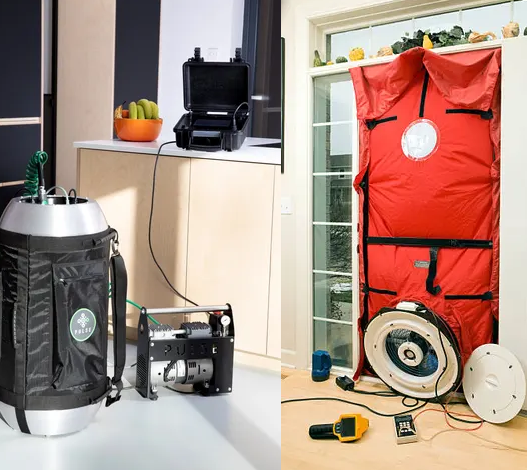
Fan Method with a Blower Door
- A fan is fixed in an external aperture (usually a door or window) to pressurize the dwelling.
- This method is suitable for demonstrating compliance with Part L.
Low-Pressure Pulse (LPP) Method:
- Another valid method for testing air permeability.
- It’s in the name, unlikely the blower door, using a fan to create artificial building pressures, this method uses low-pressure pulses of compressed air.
Learn more about the comparison between the blower door method and the pulse method here.
Guidance:
- Follow CIBSE’s TM23 for accurate testing.
- TM23 is based on ISO 9972:2015, which outlines the fan pressurization method.
Air Test Performance Targets
Approved Document L Volume 1 sets out the minimum air permeability requirements for dwellings as follows:
- 8.0 m3/(h.m2) when pressure tested at 50 Pascals (Pa) using the Blower Door methodology
- 1.57 m3/(h.m2) when pressure tested at 4 Pascals (Pa) using the Pulse methodology
Preparing for Testing
- Close Windows and Doors: Ensure all openings are sealed to prevent air leakage during the test.
- Turn Off Ventilation Systems: Disable heating, ventilation, and air conditioning systems to avoid interference.
- Seal Leaks: Identify and seal any sources of air leakage in the building fabric
Have a project in mind? Let’s get to work!
Remember, air tightness testing is not about feeling pressured; it’s about ensuring your building meets energy efficiency standards. Embrace it as a valuable step toward creating a more sustainable and comfortable living space.